اگر گروههای عاملی روی حلقه قرار بگیرند، بر واکنش پذیری حلقه اثر خواهند گذاشت. واکنش پذیری عوامل متصل به حلقه نیز بوسیله بخش آروماتیک تحتتاثیر قرار میگیرد.
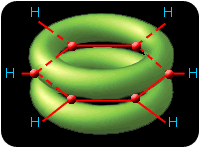
مشتقات بنزن با فشار بالا و نقطه جوش پایین هستند که با افزایش وزن مولکولی افزایش می یابد . این حلال دارای دانسیته بخار بالا هستند . بیشتر این ترکیبات به عنوان مواد شمیایی اولیه یا واسطه در ترکیبات دیگر بکار می روند. حلالهای الی همچنین در هزاران صنعت وشغل مثل :تولید رنگ ،رزین ومواد دارویی ،چاپ ، سریش و چسبها و ساخت لاستیک و… بکار می رود.
ترکیبات اروماتیک معمول استفاده شده شامل تولوئن ،بنزن ،زایلن ،استیرن ،اتیل بنزن ،مونوکلروبنزن (MCB ) وتری متیل بنزن می باشد.
بیشتر حلالهای اروماتیک تجاری نقطه جوشی دارند که خیلی کمتر از صفر درجه و بشتر از 200 درجه سانتیگراد نمی باشد .اگر نقطه جوش یک حلال خیلی بالاوفشار بخار آن خیلی کم باشد جداسازی حلال از موادی که برای حل کردن استفاده می شود بسیار دشوار خواهد بود.بنابراین بسیاری از حلالهای الی در دمای اتاق مایع هستند . حلالهای الی بوسیله خصوصیت غیر قطبی وحلالیت بالا در چربی توصیف می شوند . این حلالها به فراوانی در مخلوطهایی در محیطهای شغلی مثل ترکیبات تولوئن ، بنزن ، استیرن ،اتیل بنزن ، تری متیل بنزن و زایلن استفاده شده است . نفتالن ، اگر چه یک ترکیب اروماتیک است حلال نیست ، جامدی کریستالی ، سفید رنگ دافع بید و با فراریت بالا می باشد . حلالهای اروماتیک به اسانی از تصفیه نفت خام و زغال مشتق می شود وقتی زغال در فقدان هوا گرم می شود به ترکیبات فراری شامل گاز زغال وقطران زغال شکسته می شود . باقیمانده این پروسه کک نامیده می شود . تقطیر قطران زغال منجر به تولید ترکیباتی مثل تولوئن ،بنزن ،زایلن ، فنول ها ، کروزول ، نفتالن می شود.ترکیبات اروماتیک همچنین می تواند توسط فرایند های کاتالیکی که در ان هیدروکربن های الیفاتیک در دماهای بالا وفشار بالا برای دهیدروژنه کردن ترکیبات وشکل گیری ساختارهای حلقوی هیدروکربن های اروماتیک بکار می رود ایجاد می شوند .
Azoxybenzene and Aluminum Chloride
Aromatic Compounds

Procedure
Place 0.5 mL or 0.4 g of the dry compound in a clean, dry test tube; add one crystal of azoxybenzene and about 25 mg of anhydrous aluminum chloride. Note the color. If no color is produced immediately, warm the mixture for a few minutes. Wait for up to 30 min to observe any color change. If the hydrocarbon is a solid, a solution of 0.5 g of it in 2 mL of dry carbon disulfide may be used.
Positive Test
Formation of 4-arylazobenzene and aluminum chloride complex is a positive test.
Complications
Many oxygen-containing functionalities interfere with this test and produce confusing color changes
Chloroform and Aluminum Chloride
Aromatic Compounds

Procedure
To 2 mL of dry chloroform in a test tube add 0.1 mL or 0.1 g of the unknown compound. Mix thoroughly, and incline the test tube so as to moisten the wall. Then add 0.5-1.0 g of anhydrous aluminum chloride so that some of the powder strikes the side of the test tube. Note the color of the powder on the side, as well as the solution. Discussion. The colors produced by the reaction of aromatic compounds with chloroform and aluminum chloride are quite characteristic. Aliphatic compounds, which are insoluble in sulfuric acid, give no color or only a very light yellow. Typical colors produced are the following.
Positive Test
Formation of a colored carbocation is a positive test.
| Compound | Color |
| benzene and its homologs | orange to red |
| aryl halides | orange to red |
| naphthalene | blue |
| biphenyl | purple |
| phenanthrene | purple |
| anthracene | green |
Complications
Aromatic esters, ketones, amines, and other oxygen- or nitrogen-containing compounds may also give blue or green colors.
Reaction of Bromine with Benzene, Phenol, and Toluene


Three test tubes contain bromine. Benzene is added to the first tube, phenol to the second, and toluene to the third tube. The red color of the bromine vapor disappears from the second tube containing the phenol. pH paper indicates that hydrogen bromide was produced in this reaction.
Discussion
Bromine is shown in each of three test tubes. Benzene is added to the first tube, phenol to the second, and toluene to the third tube. The red color of the bromine vapor disappears from the second tube containing the phenol. When the vapor in this tube is tested with pH paper, the red color indicates the presence of an acidic gas (hydrogen bromide). Benzene and toluene do not react with bromine in the absence of a catalyst. Phenol is more reactive due to the presence of an electron donating hydroxyl group and reacts with bromine by a substitution reaction forming hydrogen bromide gas.
 |
Fuming Sulfuric Acid
Aromatic Compounds

Procedure
This test must be done in a hood. Place 0.5 mL of 20% fuming sulfuric acid (hazardous) in a clean, dry test tube, and add 0.25 mL or 0.25 g of the unknown. Shake the mixture vigorously, and allow it to stand for a few minutes.
Positive Test
A positive test for the presence of an aromatic ring is complete dissolution of the unknown, evolution of heat, and minimal charring.
Complications
Caution: Use this reagent with relatively inert compounds only, such as those compounds that do not dissolve in the solubility tests with concentrated sulfuric acid. Compounds for which preliminary tests indicate strongly activating groups (OH, NH2, etc.) may be decomposed violently by fuming sulfuric acid.
Aromatic Substitution Reactions
Aromatic Substitution Reactions Part II
